Website Presence
The website is the front door, not the whole building
Website Presence is the public part of the system: pages that explain the business, earn trust, and hand every inquiry straight into the customer records behind them.
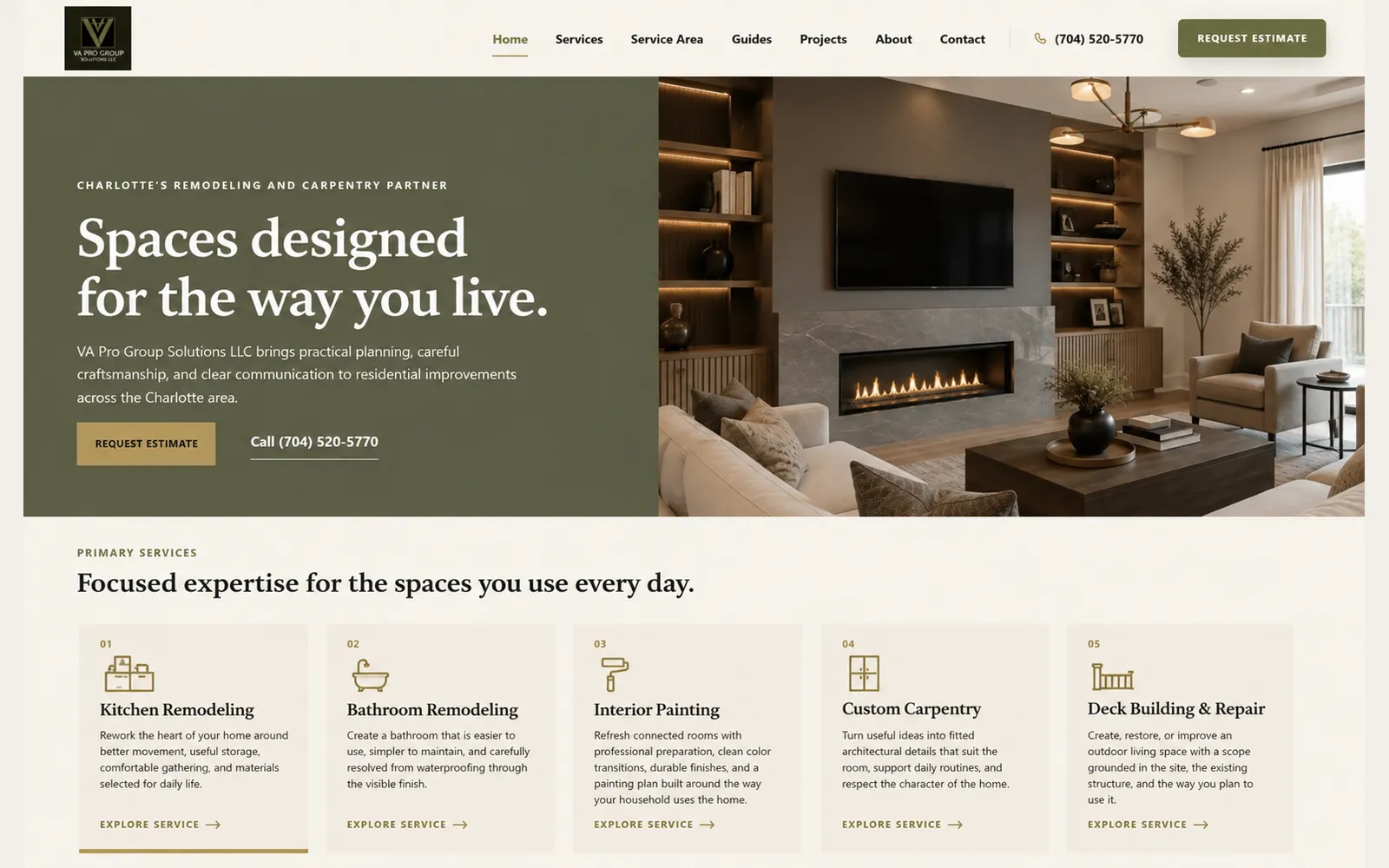
A website that only looks finished
It has pages, photos, and a contact form that emails an inbox nobody owns. It cannot tell you which inquiries it produced, which of them were answered, or whether it earned anything back.
Built to be found, and to hand the work over
Unique titles and descriptions, a correct heading structure, structured data, a sitemap, and a Google Business Profile foundation make the pages findable. Every inquiry then becomes a record in CRM Core rather than an email in a shared inbox.
A website should produce business information, not just traffic
A business website should do more than generate visits.
The real question is what happens after someone arrives.
Which page brought the inquiry? Which service was the visitor interested in? Did they complete a form, request information, or leave without taking action? Was the inquiry answered? Did it become an estimate, a project, or nothing at all?
If the website stops at sending an email notification, most of that context is lost.
Website Presence is designed so an inquiry can enter the business with its source and relevant context attached. That gives the CRM and the Owner a clearer view of where work is coming from and what happens after the first contact.
This matters because traffic by itself is not a business result.
A website can receive hundreds of visits and still fail if the business cannot tell which pages produce qualified inquiries or whether those inquiries are actually being handled.
The goal is to connect public visibility with operational follow-through.
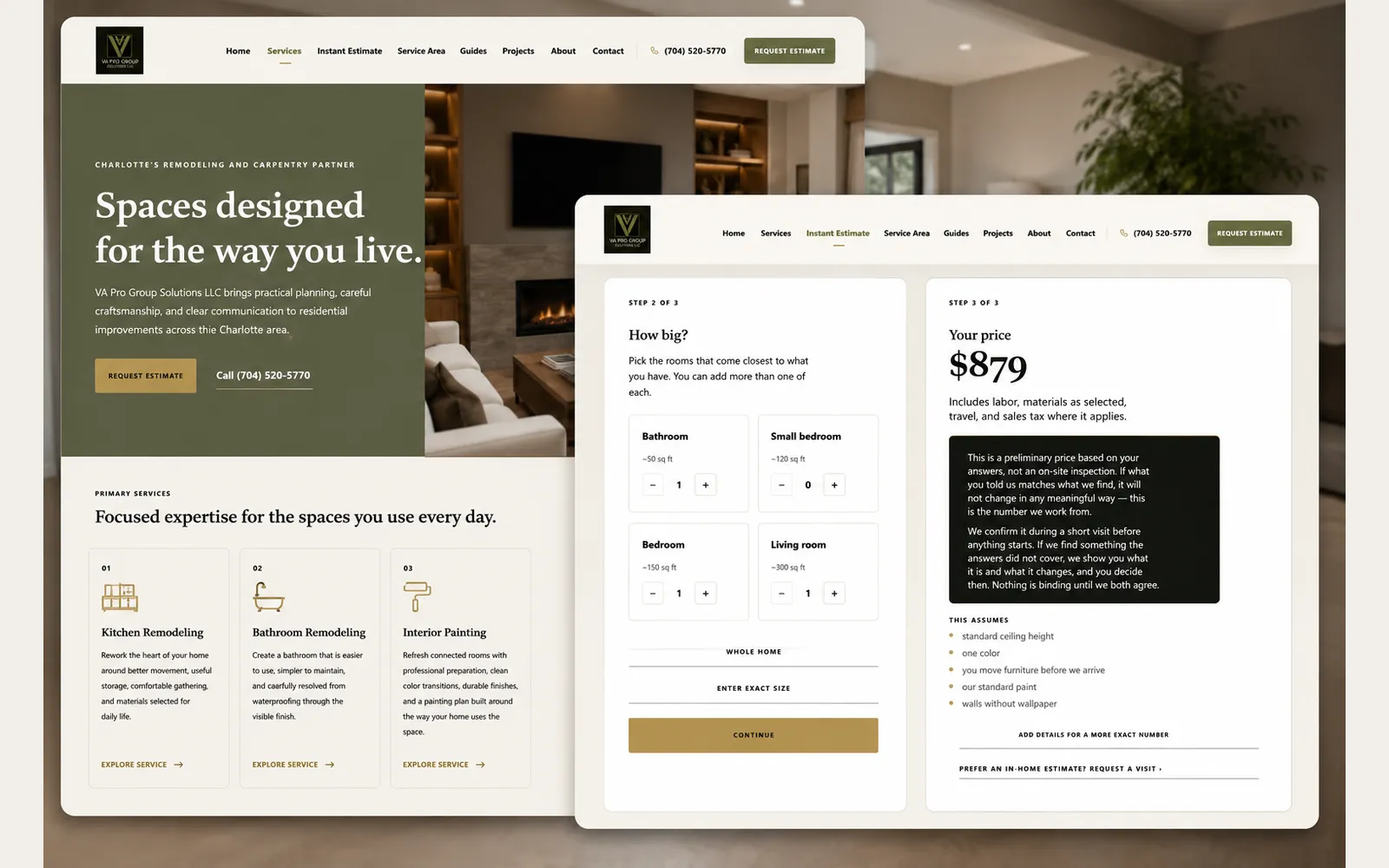
Built for people first, and structured so search systems can understand it
Search visibility starts with clear information.
A page should make it easy to understand what the business offers, who the service is for, where it is available, what the process looks like, and what the visitor should do next.
That clarity helps people make decisions.
It also gives search engines and AI systems better information to work with.
Website Presence is structured around unique page titles, descriptions, headings, internal links, structured data, canonical URLs, sitemaps, accessible media, and clear page topics.
But technical SEO is only the foundation.
The content itself still has to be useful, specific, and accurate.
A page created only to target a keyword without answering a real customer question is not a strong business asset. A useful page should explain the subject well enough that a potential customer can understand the service and that a search system can identify what the page is actually about.
The objective is not to manipulate search rankings. The objective is to create pages that deserve to be found because they clearly represent the business.
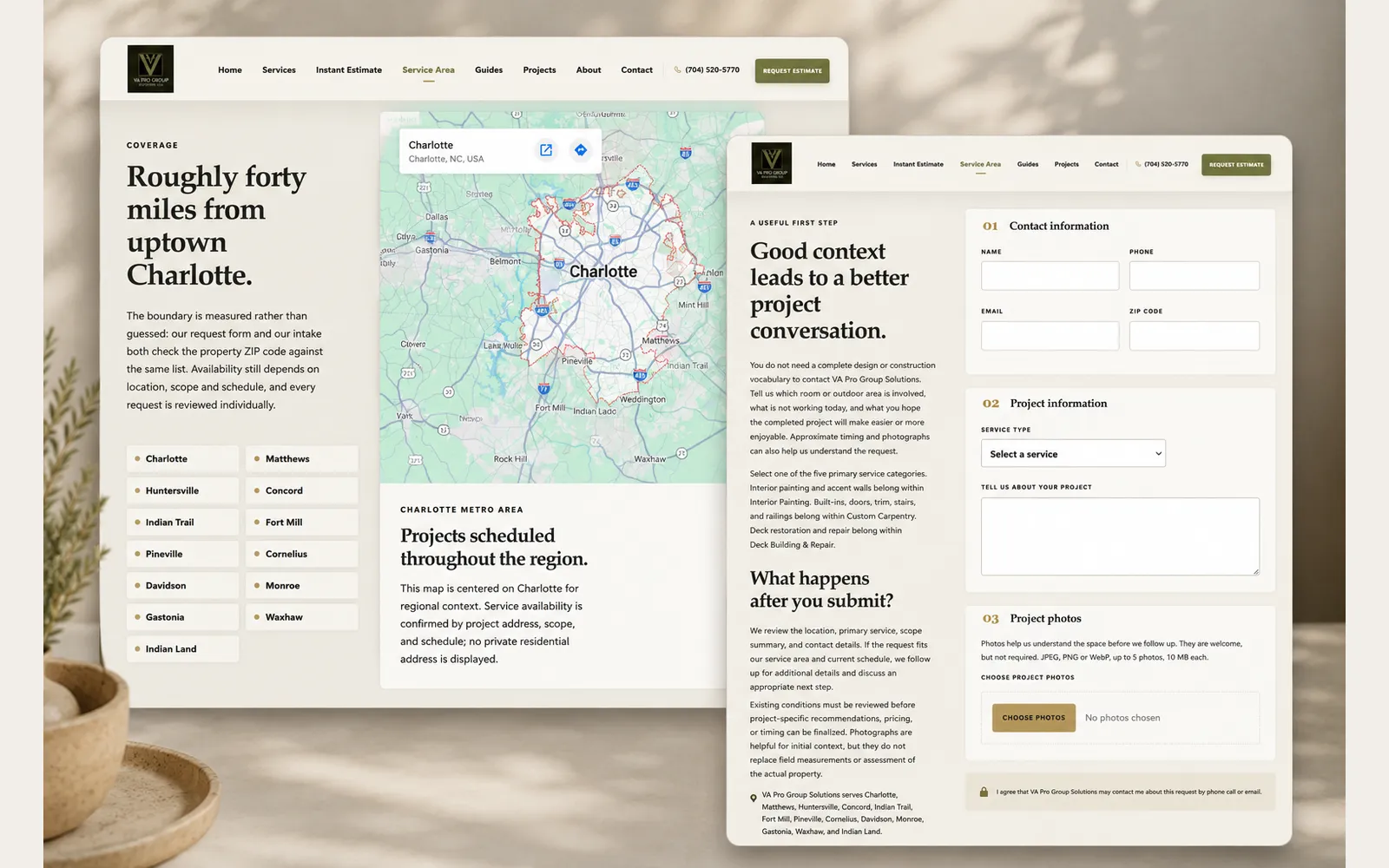
A website should support trust before the first conversation
For many customers, the website is the first place where they decide whether a business looks credible enough to contact.
That decision is influenced by more than design.
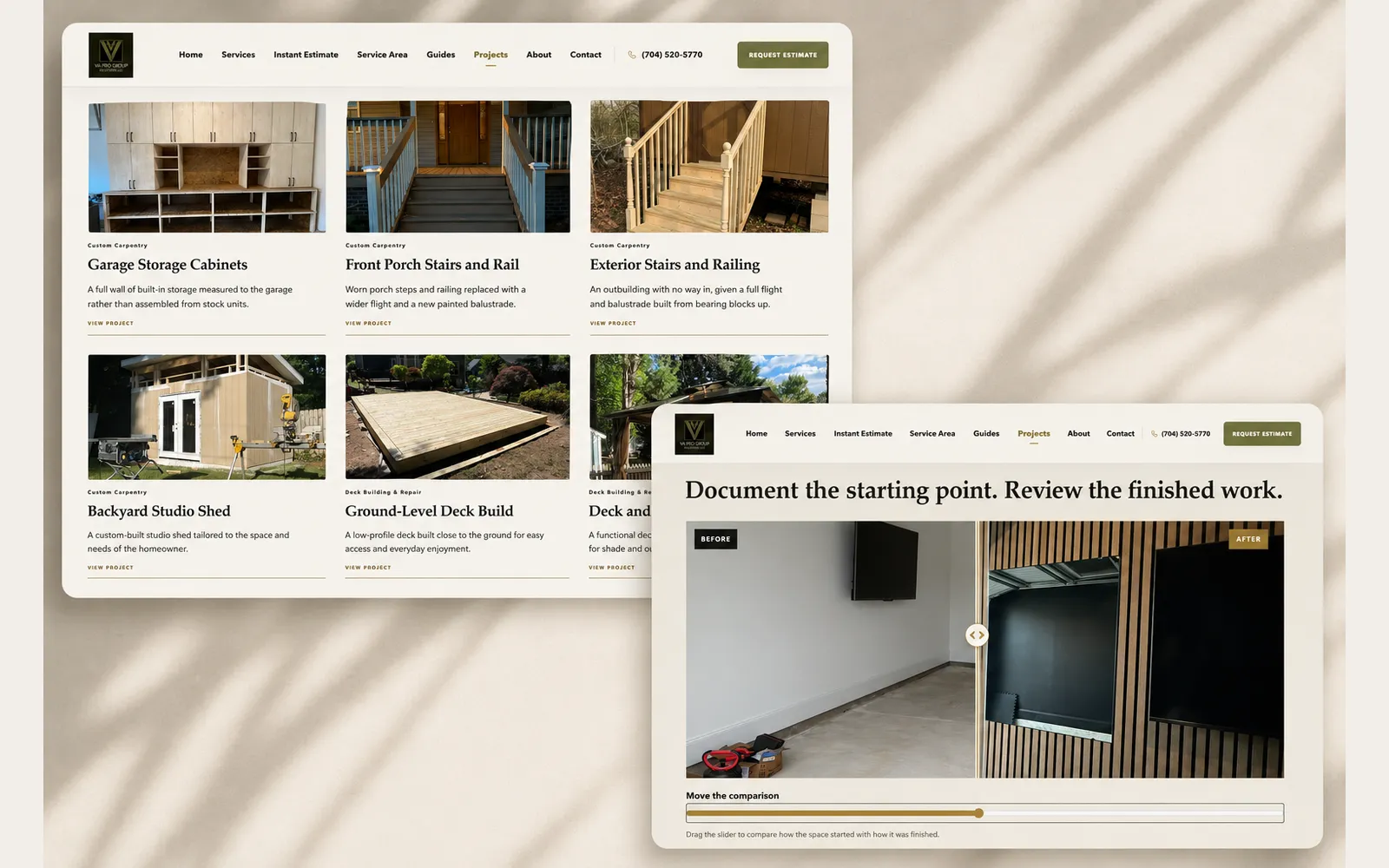
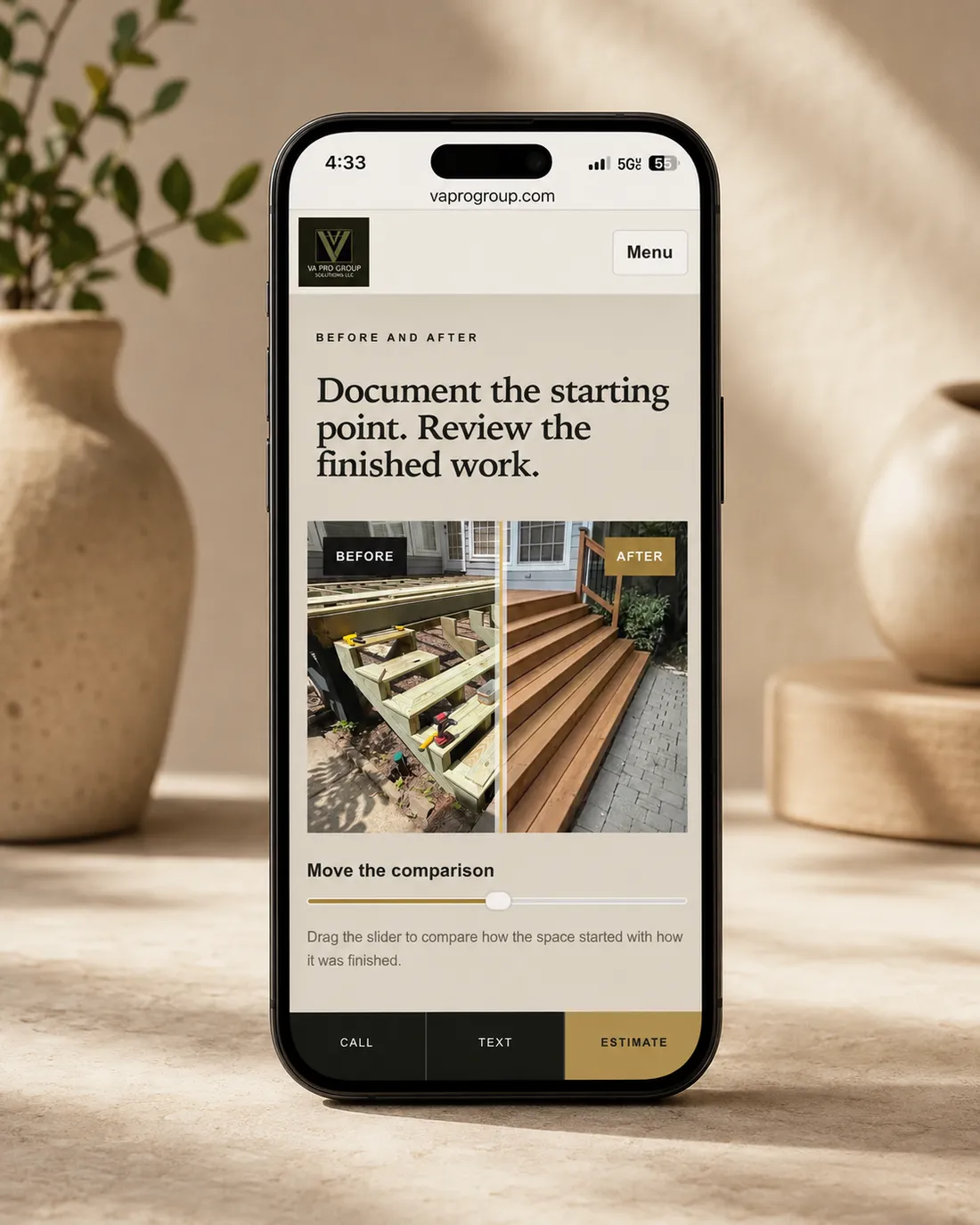
Clear services, real pricing where appropriate, a visible process, accurate company information, legal pages, privacy language, ownership details, project evidence, and consistent contact information all contribute to trust.
The website should also avoid signals that make the business look less established than it actually is — vague claims, exaggerated guarantees, manufactured urgency, inconsistent information, or promises that cannot be verified.
VA Pro Studio treats the website as part of the operating system because trust and operations are connected.
The public site sets expectations. The CRM receives the inquiry. The portal continues the relationship. The system should tell one consistent story from the first visit onward.
Found
Unique titles and descriptions, clean heading structure, structured data, a sitemap, and a Google Business Profile foundation.
Understood
Plain-language pages that clearly state what the business does, who it serves, and what happens next, making the information easier for both people and AI-driven search systems to understand.
Trusted
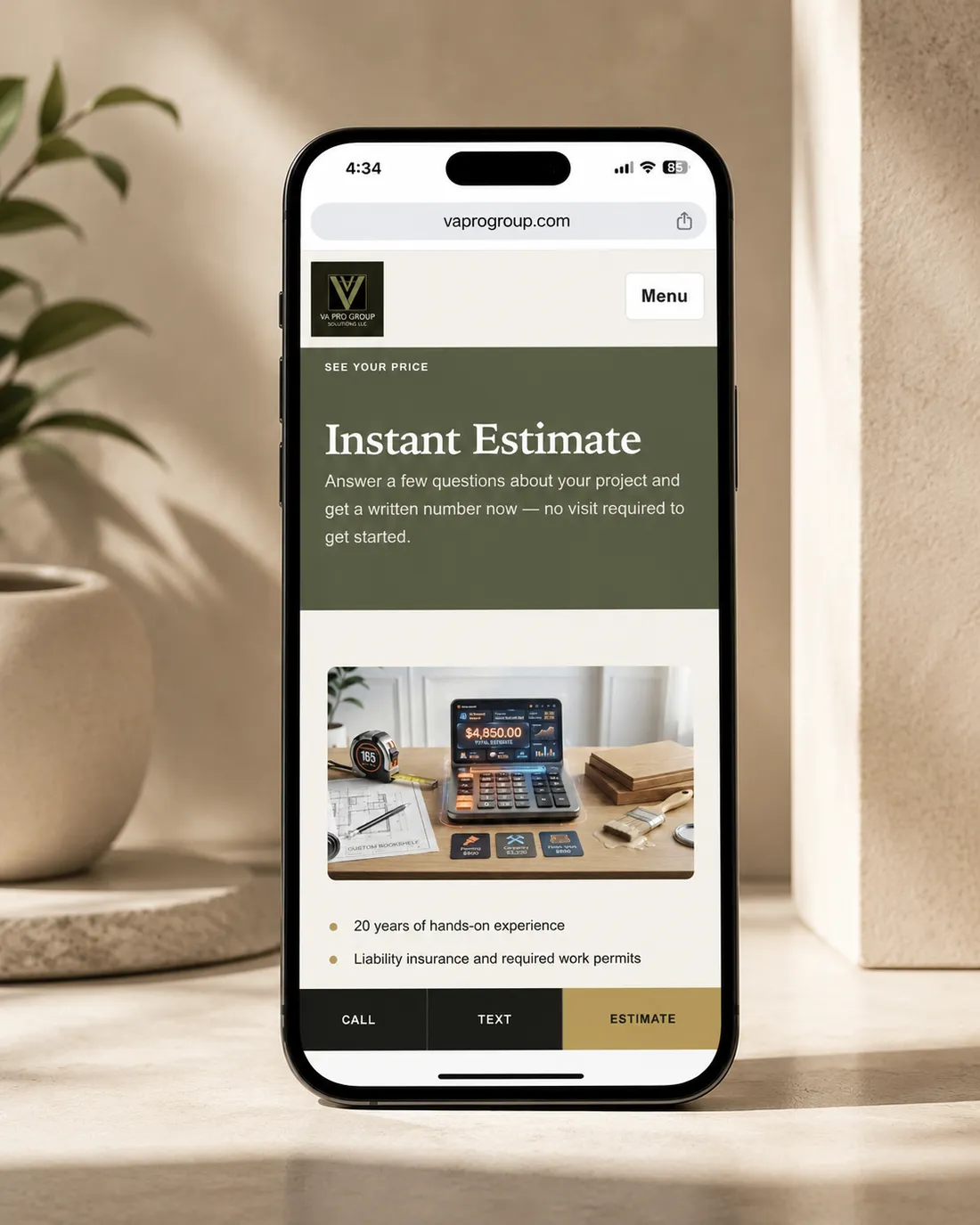
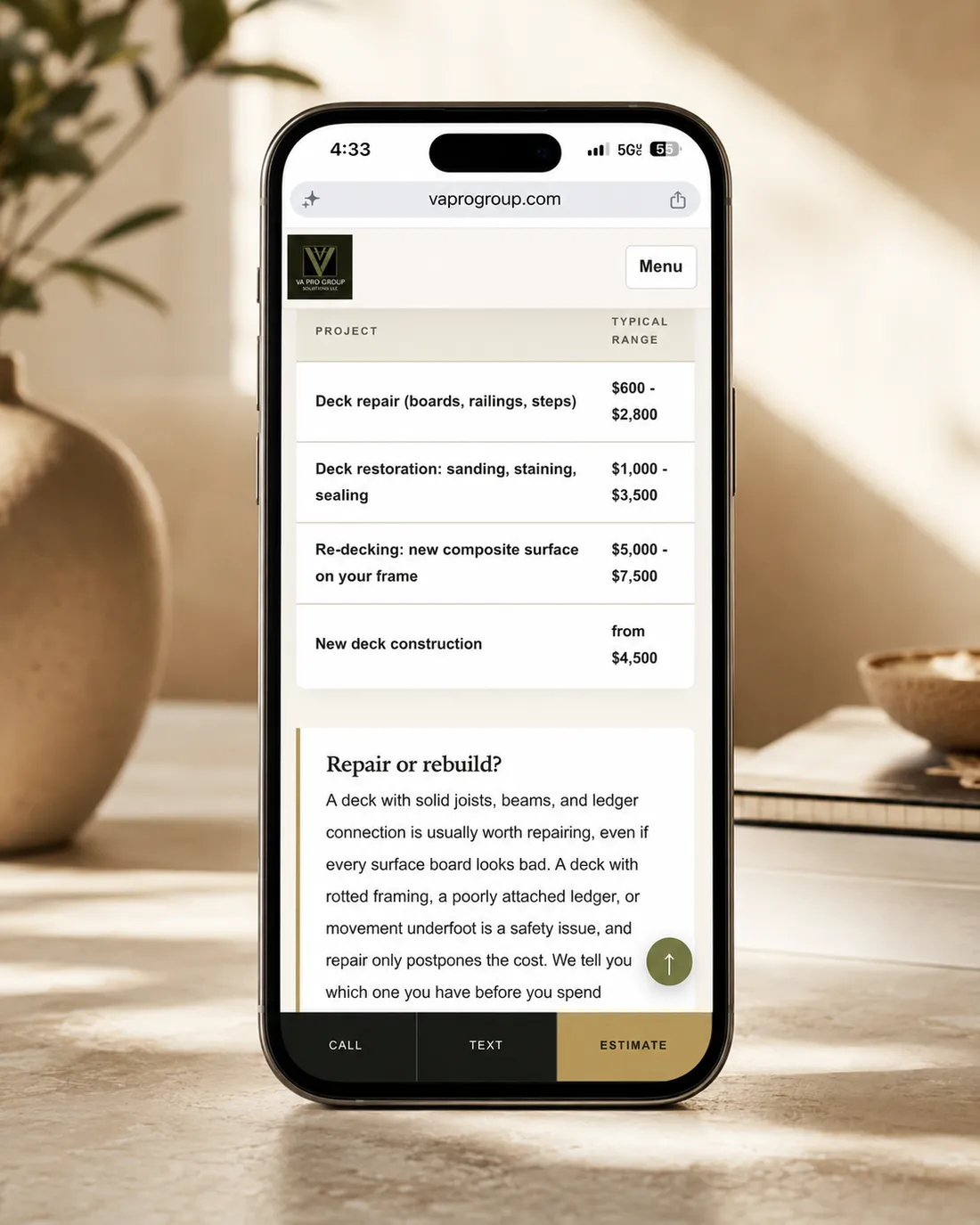
Real scope, real prices where they are approved for publication, and no manufactured urgency.
Captured
Every inquiry becomes a customer record with its source, so the site can be judged by the work it produces.
Common questions
Can I keep my current domain?
Yes. You own your domain, your content and media, and your business data. Domain transfer or delegation is handled during onboarding.
Will the site rank?
No one can promise a ranking, and we do not. What is committed is the technical foundation: unique metadata, heading structure, structured data, sitemap, Google Business Profile setup, and technical SEO health under a support plan.
Do I get the design and the content?
You own your domain, your supplied or licensed content and media, your business data, and the approved individual design of your website. The reusable platform core behind it stays with VA Pro Studio.
A site that reports back
A website and business foundation, customer and inquiry records, and a Google Business Profile and SEO foundation start from $7,900 with Managed Service.