Шар автоматизації
Повторний контакт, нагадування, погодження й маршрутизація, які зменшують навантаження Owner.
Automation проєктується як контрольований операційний шар: повторювана робота отримує структуру, а чутливі рішення залишаються за людиною.
Автоматично там, де безпечно; з погодженням там, де ні
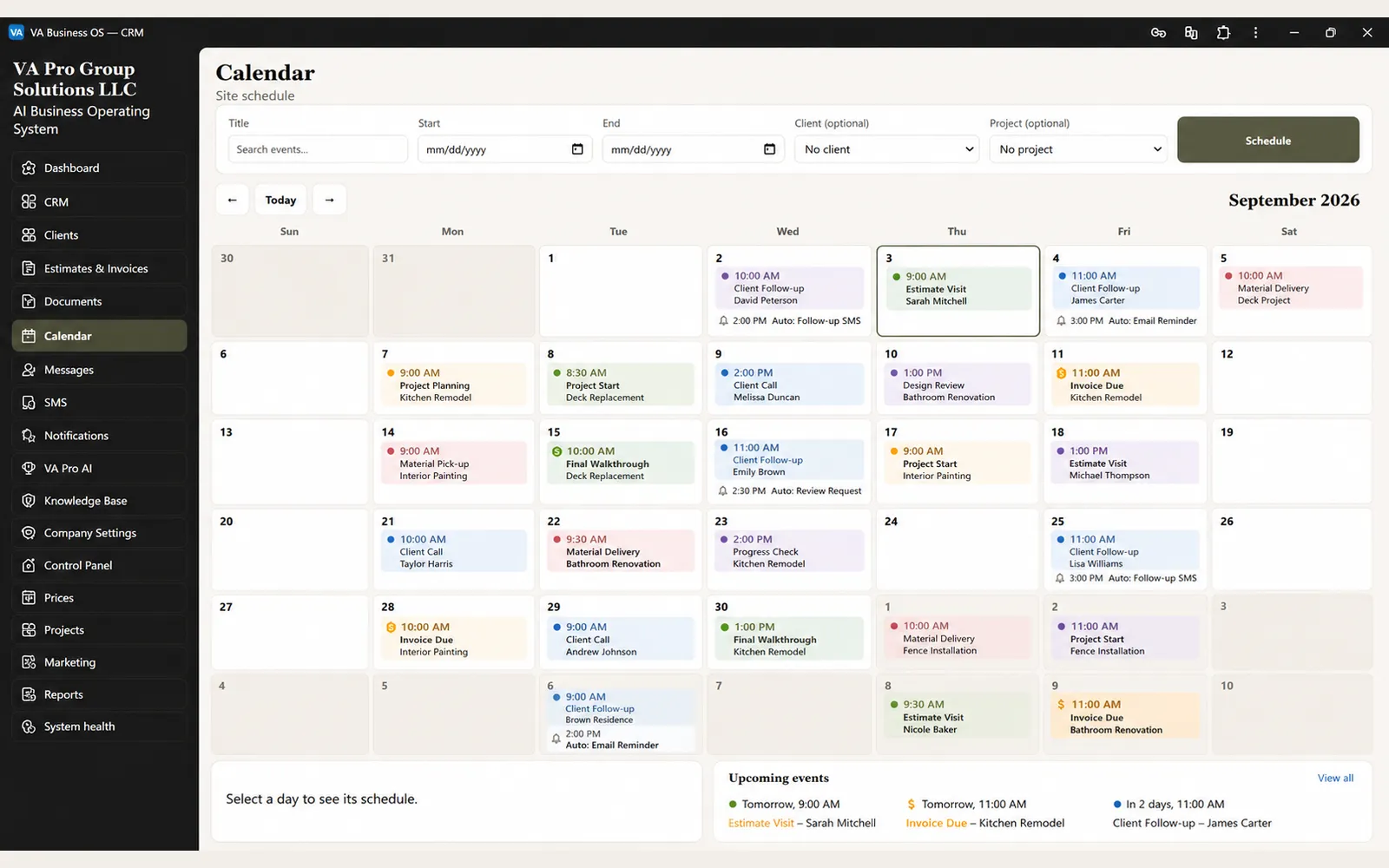
Нагадування, повторний контакт, маршрутизація та зміна статусів працюють самі. Фінансові, юридичні та такі, що змінюють права, кроки зупиняються й чекають рішення людини, а кожен перехід записується, а не відбувається непомітно.
Automation should remove repeated work, not remove judgment
The most useful automation in a service business usually begins with work that is predictable, repetitive, and easy to forget when the day gets busy.
A new inquiry may need a response. An estimate may need a follow-up. An appointment may need confirmation. A client may need a reminder. A project may be waiting on an approval. An internal request may need to reach the right person.
None of these tasks is complicated on its own.
The problem is that they compete with active jobs, phone calls, field work, customer questions, and everything else the team is handling at the same time.
When the process depends entirely on memory, the business eventually misses something.
Automation creates a defined path for those repeated actions.
Instead of asking someone to remember every follow-up, the system can recognize that a customer is waiting, a deadline is approaching, or a workflow has reached a specific stage and prepare the next action accordingly.
That does not mean the system should make every decision automatically. Some steps are operational and predictable. Others change money, scope, access, commitments, or customer expectations. Those actions should remain behind explicit approval.
The value of automation is not that “the computer does everything.” The value is that routine work becomes more consistent while important decisions stay with the people responsible for the business.
Automation works best when it understands the workflow
Automation becomes much more useful when it is connected to the same customer, project, and status information used by the rest of the business.
A reminder should not be sent simply because a timer expired.
It should be sent because the system knows what stage the work is in, what has already happened, what is still waiting, and whether another action has already resolved the need.
The same applies to routing and internal tasks.
A request can be directed based on project type, customer status, assignment, workflow stage, or another approved business rule instead of whoever happens to notice the message first.
Because the automation layer sits on top of the connected operating system, it can use existing business context rather than creating another separate database of rules and reminders.
That makes the workflow easier to supervise. The Owner can see why an action was triggered, what happened next, and where a human decision is required.
As additional delivery channels such as email, SMS, task systems, or external providers are introduced, those actions should continue to follow the same approval, consent, security, and audit rules.
Automation should extend the operating system. It should not become another invisible system running beside it.
Start with the gaps that already cost the business
Not every workflow should be automated.
Discovery should first identify where the business is already losing time, consistency, or follow-up. Typical candidates include:
- unanswered inquiries
- estimates that receive no follow-up
- appointment confirmations and reminders
- approvals waiting too long
- repeated status updates
- internal routing
- overdue tasks
- recurring administrative steps
The priority should be the workflows where automation removes real friction, not automation for its own sake.