
AI Operations
Planificación, resúmenes, evaluación y futura automatización segura supervisadas por el Owner.
AI Operations está diseñada para ayudar al Owner a razonar sobre contexto de proyectos, decisiones, soporte, bloqueadores y próximos pasos sin reemplazar aprobaciones.

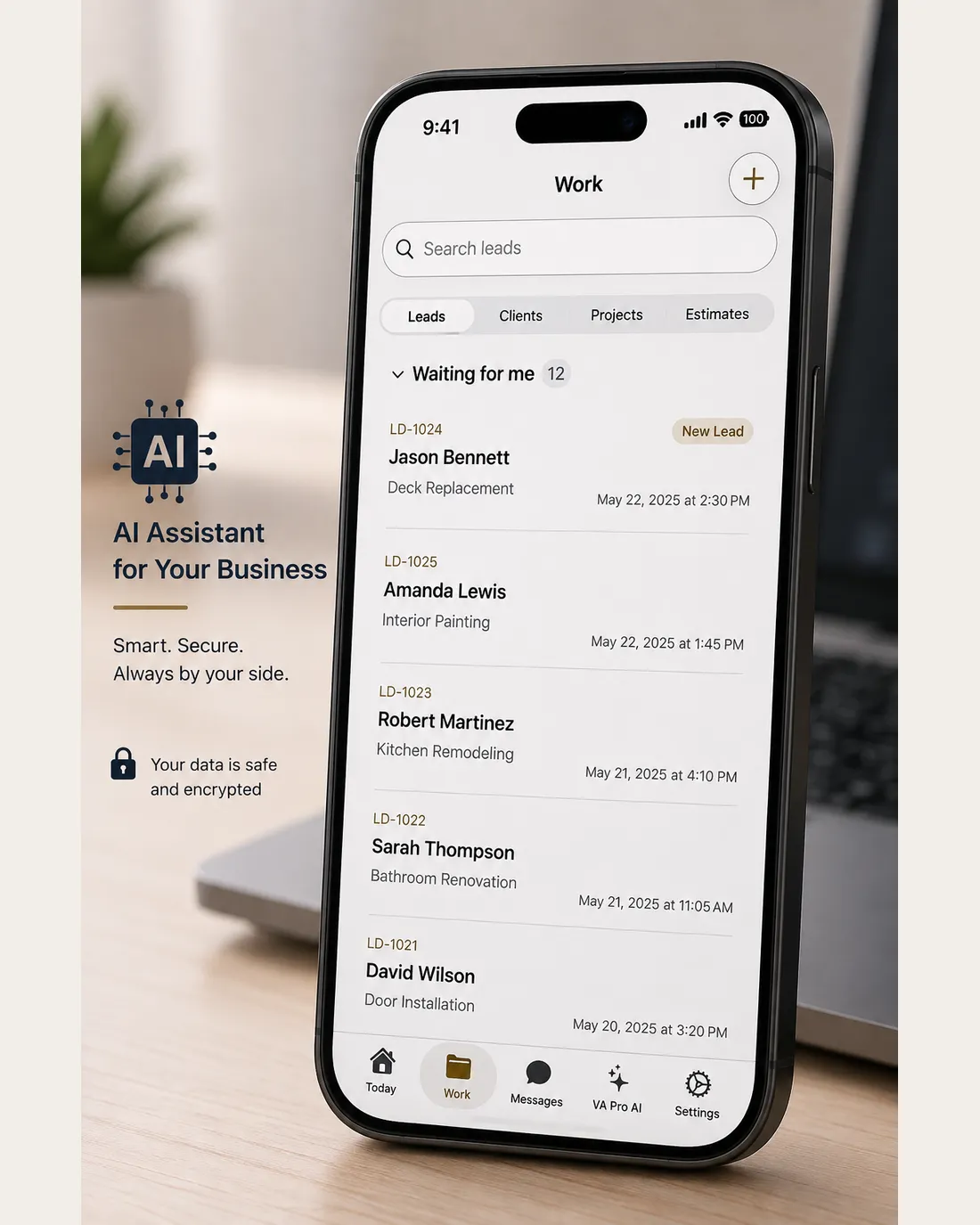
Basado en sus registros, limitado por la aprobación
La planificación, los resúmenes y las revisiones se construyen sobre el historial del Project, las decisiones registradas, el historial de soporte y los bloqueos abiertos. Los límites de Company y Project se mantienen, y toda acción financiera, legal, sensible o irreversible exige una decisión humana.
The useful part of business AI is context
A general AI assistant can write, summarize, and answer questions.
What it does not automatically know is your business.
It does not know which customer is waiting for an answer, which estimate is still open, what was approved on a project, which support issue keeps returning, or which workflow has stalled.
That context is what turns AI from a general-purpose assistant into a useful operational tool.
AI Operations is designed to work with approved information already held by the business system.
That may include customer history, project status, previous decisions, documents, support activity, workflow events, or other structured business information that is relevant to a specific task.
With that context, AI can help prepare summaries, surface patterns, draft responses, organize information, identify open issues, and help the Owner review what needs attention.
The value does not come from asking a more powerful model a more complicated prompt. The value comes from giving the system the correct business context and defining exactly what it is allowed to do with it.
AI can prepare the decision without owning the decision
There is an important difference between assistance and authority.
AI may be useful for preparing a recommendation, summarizing available information, comparing options, drafting a response, or flagging something unusual.
That does not mean it should be authorized to complete the final action.
A system might identify that an estimate has been inactive for several days and prepare a follow-up draft. It might summarize the history of a project before the Owner reviews a change. It might flag that a support request resembles an earlier issue or prepare information that helps someone make a faster decision.
But actions involving money, contractual commitments, permissions, sensitive access, security, or irreversible changes should remain behind human approval.
This separation makes AI useful without quietly transferring business authority to a model.
The Owner remains accountable for the decision. AI reduces the work required to understand and prepare it.
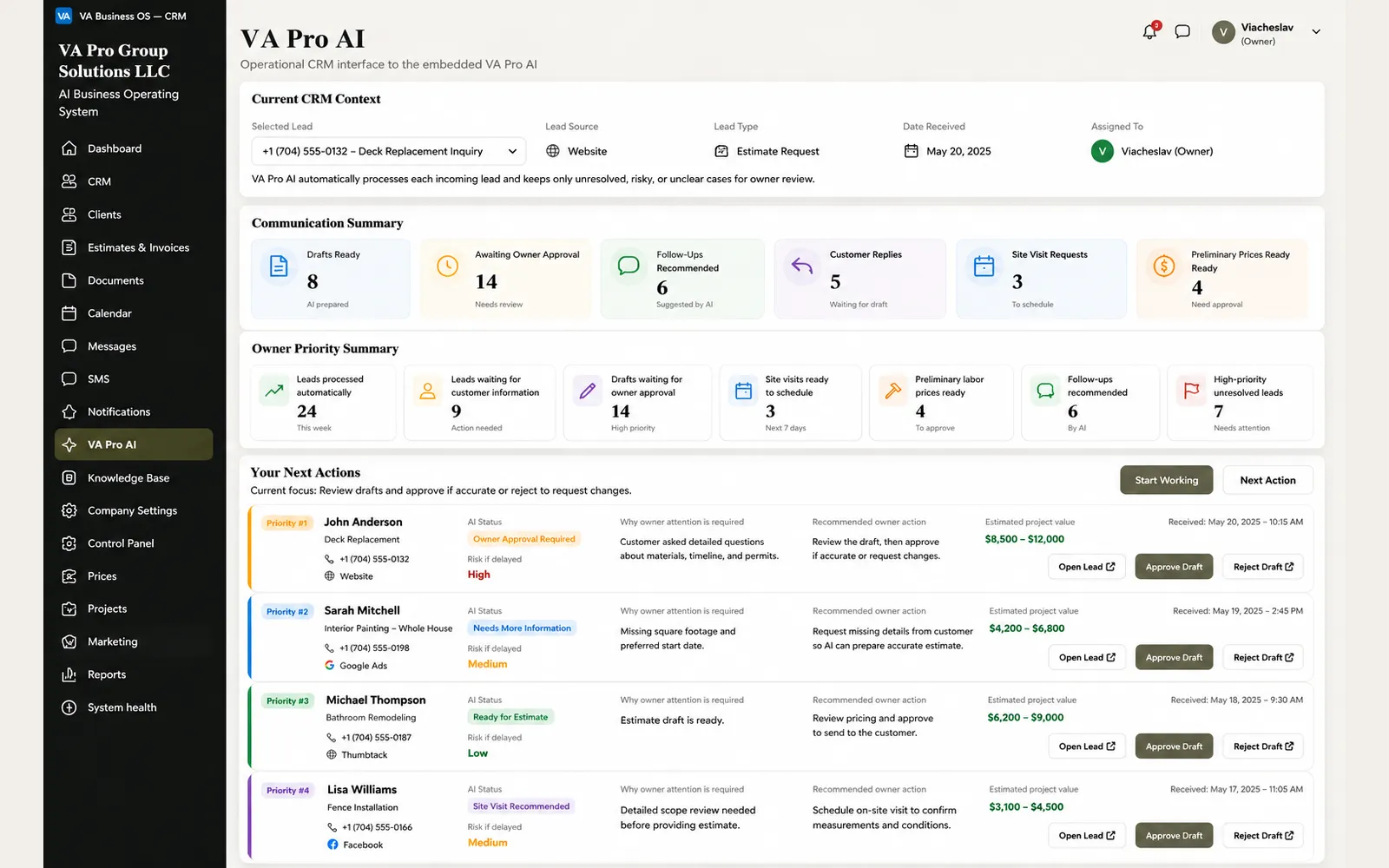
Business data should stay inside defined boundaries
AI is only useful in an operating system if access to information is controlled.
A model should not receive every piece of company data simply because the data exists.
The information available to an AI-assisted workflow should be limited by the same principles used elsewhere in the system: company, project, role, task, and purpose.
A task involving one customer should not automatically expose another customer's records. A project summary should not include unrelated commercial information. An employee-facing workflow should not gain access to Owner-only information simply because AI is involved.
The same principle applies to external AI providers.
Provider selection, retention policies, model access, tool permissions, and execution rules should be evaluated before business information is sent or actions are enabled.
AI should operate inside the security model of the business system. The business system should not weaken its security model simply to make AI easier to use.
AI capabilities should earn their place in the system
VA Pro Studio does not treat AI as a feature that must be added everywhere.
A workflow should use AI only when it solves a real operational problem better than a simpler rule, automation, search function, or human process.
Some tasks do not need AI at all.
A fixed reminder can be handled by automation. A permission check belongs in system logic. A financial approval belongs to a person.
AI becomes useful where interpretation, summarization, drafting, comparison, pattern recognition, or working with larger amounts of business context can reduce meaningful work.
That distinction matters because the goal is not to make the system look more advanced. The goal is to make the business operate better.